
Oliver Blower, Operations Lead at the Planning Inspectorate, shares how we're improving our national infrastructure planning services, from application submission and project mapping to public participation.
The quality of a planning process is often judged by its outcomes. But for the people using it day to day, the experience matters too.
For applicants, that might mean uploading thousands of pages of documentation. For local authorities and statutory consultees, it can mean reviewing complex proposals against tight deadlines. For members of the public, it may simply be understanding what is being proposed in their area and how they can have their say.
When services are difficult to navigate, everyone spends more time managing the process and less time focusing on the issues themselves. That's why we have been working to make our National Infrastructure Planning Service simpler, clearer and easier to use.
Making application submission more straightforward
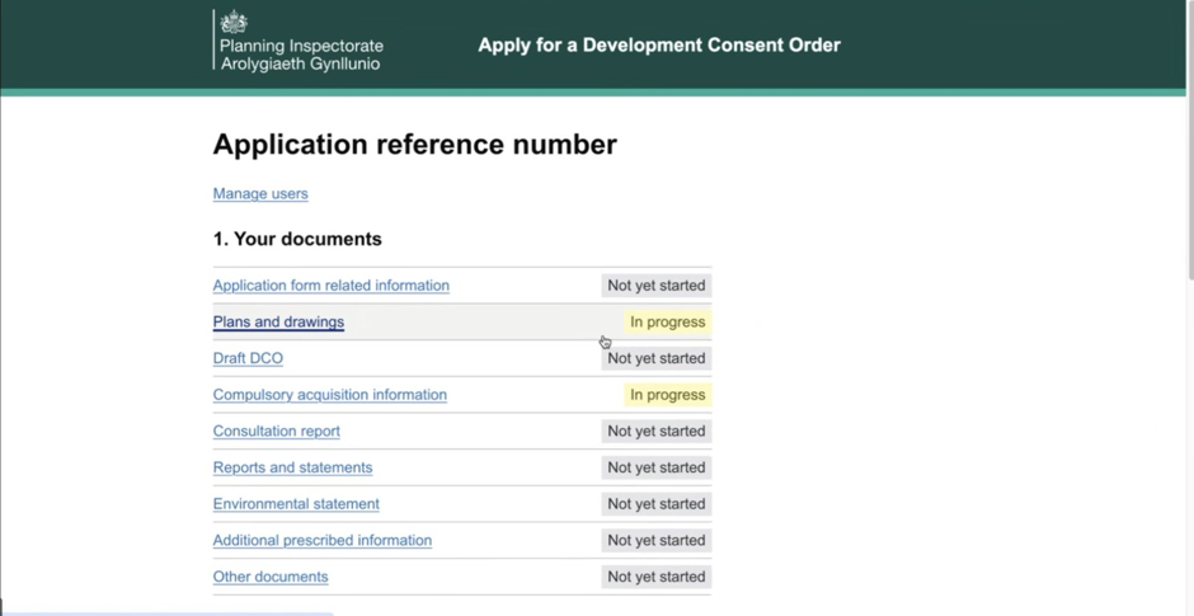
Preparing and submitting a Development Consent Order application is a complex undertaking. Project teams often work across multiple organisations, manage large volumes of technical documentation and coordinate contributions from numerous specialists. Even small inefficiencies can add time and effort to the process.
To help address this, we are piloting a new applicant portal with a small number of projects. The portal has been designed around the way applicants already prepare submissions, allowing documents and supporting information to be uploaded directly against application form questions.
The portal aims to create a more structured submission experience. Project teams can manage access for multiple users, organise documents more effectively and build submissions over time before formally submitting them. The application form is generated automatically as part of the process, helping ensure that it reflects the final submission.
Feedback from early users has been encouraging, particularly around the ease of uploading documents and handling larger files. As we continue the pilot, we will use that feedback to refine the service further.
As applicants approach submission, their case manager at the Inspectorate will provide access to the portal in good time. We encourage applicants to log in as early as possible to familiarise themselves with the service and submission process.
Helping users see projects in a different way
For many users, understanding where a project is located is the starting point for engagement. Whether reviewing a proposal, assessing potential impacts or simply exploring projects in a particular area, location information is often one of the first things people look for.
That is why we introduced enhanced mapping functionality on the Find a National Infrastructure Project website. Users can switch between a traditional project list and a map view, making it easier to explore projects geographically. Where boundary data is available, project extents can also be viewed directly on the map and on individual project pages.
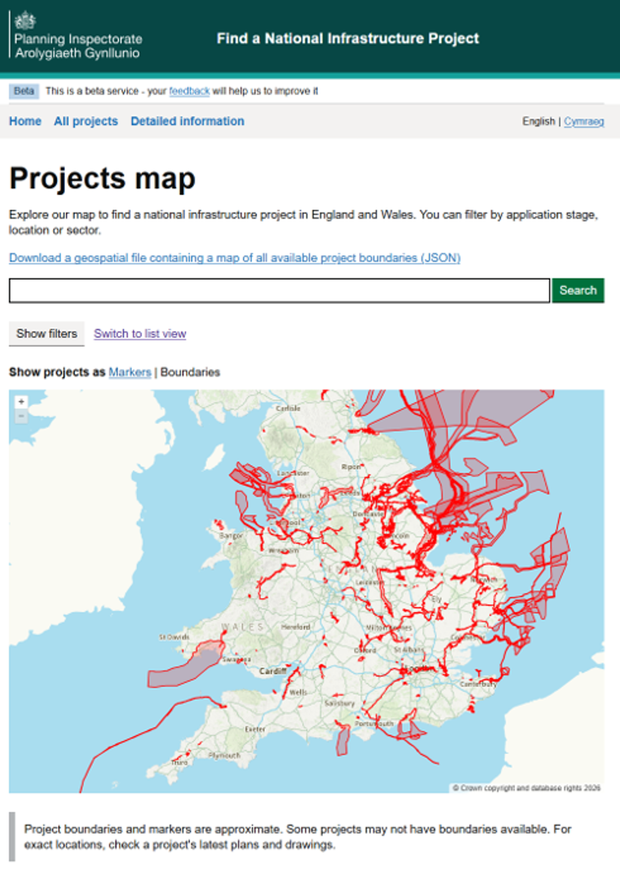
We have also made available downloadable geospatial data for project boundaries where this information exists. For planning professionals, local authorities and consultees, this can make it easier to work with project information alongside their own datasets and systems.
While project boundaries remain indicative and may change as projects progress, the new mapping tools provide a more accessible and visual way of exploring the Nationally Significant Infrastructure Project (NSIP) landscape.
Making participation clearer and more transparent
Taking part in the planning process should be as straightforward as possible. We have therefore made a number of improvements to the Register to Have Your Say service, focusing on clearer guidance and better information for users.
One area of feedback we have considered is the need for greater clarity about what information is published as part of the process. Updated content now provides clearer explanations, helping people submit representations with greater confidence and understanding.
We have also introduced a new artificial intelligence declaration. As AI tools become increasingly common, some users may choose to use them when drafting representations. The declaration does not discourage or prevent this. Instead, it asks users to confirm that they have reviewed their submission, checked it for accuracy, and ensured it reflects their own views.
Later this year, we will introduce additional questions to help identify affected persons who submit relevant representations. This will help ensure that submissions from people whose land or rights may be affected can be identified and supported more effectively throughout the process.
Continuous improvement, informed by users
None of these developments represent a finished product. They are part of a wider programme of continuous improvement across our National Infrastructure Planning Service.
The most valuable insight comes from the people who use these services every day. Applicants, planners, local authorities, statutory consultees and members of the public all experience the process from different perspectives, and their feedback plays an important role in shaping future improvements.
Whether it is reducing the administrative burden of submitting an application, making project information easier to access or helping people participate more confidently, our focus remains the same: creating services that are easier to use, more intuitive and better suited to the needs of those who rely on them.
Leave a comment